
Land gets priced completely differently than houses, and most people who own a parcel around here have never been told how. If the question in your head is what is my land worth in Orange Park, here’s what somebody buying it is actually calculating.
Work through these in order. Each one either supports the price or takes a chunk out of it.
First question: can somebody build on it?
Everything starts here. A parcel that can hold a house is worth a multiple of an identical parcel that can’t.
Two things decide it. Zoning, which determines what’s allowed, and physical suitability, which determines what’s possible. Both have to work. A parcel zoned residential that won’t pass a soil evaluation is not a homesite, it’s recreational land, and the price difference is not small.
Pull your record from the Clay County Property Appraiser and confirm the acreage and classification, then read the county’s planning FAQ for what’s actually permitted. Twenty minutes, and it’s the foundation of every other number.
Second question: where does the waste go?
This is the one that decides more land deals in Clay County than anything else, and owners consistently underestimate it.
The county does not provide countywide water and sewer. Outside the incorporated town limits, a buyer is looking at drilling a well and installing a septic system, and the septic is the constraint. A drain field needs soil that percolates and enough separation from the well and any surface water.
If you don’t know whether your parcel perks, that’s the first thing a serious buyer asks and the first thing you should find out. A completed soil evaluation is one of the few pieces of due diligence that pays for itself, because “it perks” is a fact that supports your price and “I don’t know” is a discount somebody else takes.
Third question: how do you legally get to it?
Access is worth real money and its absence costs more than people expect.
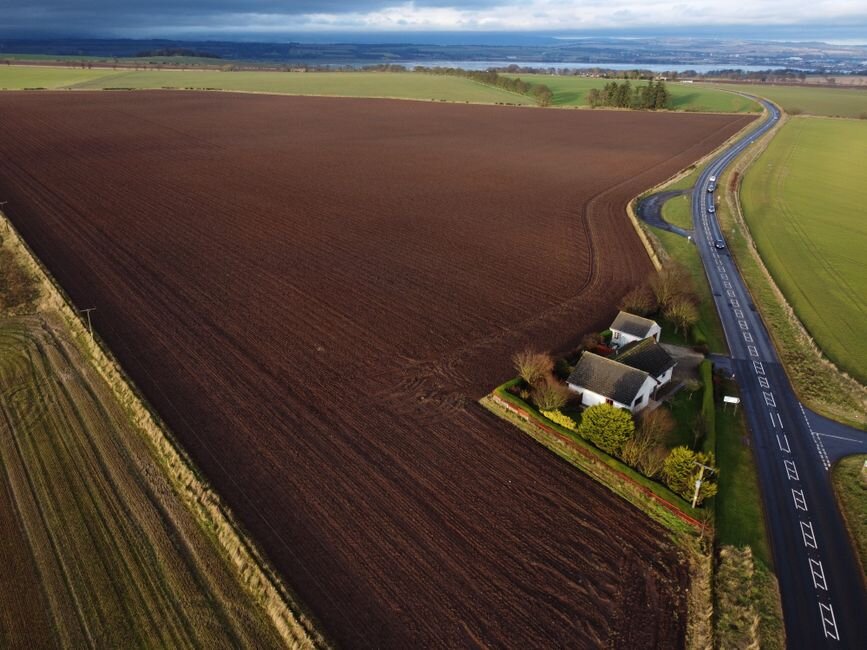
A parcel with frontage on a maintained public road is straightforward. A parcel reached by driving across somebody else’s property needs a recorded easement, and years of the neighbor being fine with it is not a recorded easement.
Landlocked parcels do sell. They sell to a much narrower group, usually the adjoining owner, at a much lower number. If that’s your situation, the adjoining owner is genuinely your best prospect and worth approaching directly.
Fourth question: what’s recorded against it?
Old paperwork on raw land surfaces late and changes what a buyer will pay.
Somebody recorded a utility right of way in 1962. A drainage easement runs across the back third. A neighbor has documented access through the middle of the parcel. None of that stops a sale, but each one restricts where a buyer can put a house, and a restricted building envelope is worth less than an open one.
I learned that lesson the expensive way on a vacant lot I bought. Sewage started backing up a month after we had the septic drained, with no cause anybody could find. It turned out a neighboring property had been tied into that system for years under an easement nobody had disclosed and the title company hadn’t caught. It ended in a title insurance claim and I eventually sold the lot to the neighbor.
Which is why a buyer prices uncertainty. Every unknown on a parcel is a number somebody has to guess at, and people guess conservatively when it’s their money.
Fifth: how a buyer actually builds the number
Backwards from what the finished thing is worth, not forward from what you paid.
Take what a completed house on that parcel would sell for. Subtract the cost to build it. Subtract site work, which on raw land means clearing, a driveway, a well, a septic system, and running power. Subtract the holding cost during permitting and construction, and Clay County’s total millage runs around 15.05 while nothing is happening on the property. Subtract a margin.
What’s left is what the dirt is worth. That’s the whole calculation, and it’s why two parcels of identical acreage can be worth very different amounts. One needs $40,000 of site work and one needs $12,000.
What the county says it’s worth is not what it’s worth
Owners quote me their assessed value all the time as though it settles the question. It doesn’t, in either direction.
Assessed value is a mass-appraisal figure produced for taxation across thousands of parcels. It isn’t a market appraisal of your specific ground, it doesn’t reflect whether your soil perks, and it doesn’t know what your access situation is. On raw land it’s frequently well off in one direction or the other.
What it is useful for is your holding cost. Clay County’s total millage runs around 15.05, and on a parcel producing no income that’s money going out every year with nothing coming back. Pull your figure at the Clay County Tax Collector and multiply it by how many more years you’re willing to hold. That number tends to focus the decision.
What makes land sell slowly
Financing, mostly, and it’s structural rather than a market condition.
Raw land loans require larger down payments and shorter terms than a mortgage, and plenty of banks don’t write them at all. So a large share of land transactions are cash regardless of how you sell, which narrows your buyer pool before anything else about your parcel enters the picture.
Meanwhile you’re paying taxes on an asset producing nothing. That’s pure outflow, and it’s why land sellers who wait for the perfect buyer frequently end up behind where they’d have been taking a reasonable number two years earlier.
What’s happening on the western side
Worth knowing if your parcel is out that direction. The First Coast Expressway changed the drive-time math, and Clay County identifies Branan Field and the nearby master-plan districts as some of its fastest-growing areas, with that growth tied in part to the expressway.
I’d be careful assuming that lifted your specific parcel, though. Growth in a region and appreciation on one piece of ground are related but not the same thing, and I’m not going to hand you a number on it because I don’t have a sourced one to give.
What to do with all this
Get the soil evaluation, confirm your access is recorded, and pull the title work before you price anything. Those three facts are worth more to your number than any amount of marketing.
Then decide honestly about time. A clean, buildable parcel with good access sells well on the open market and you should price that path out properly. Count the taxes you’ll pay while it sits, because on land that stretch is usually measured in seasons rather than weeks.
A parcel with no perc test, questionable access, an easement problem, back taxes, or heirs scattered across three states is a different situation. That’s a small buyer pool and a long wait, and you’re paying to find out. We Buy Houses Orange Park buys vacant land including parcels with exactly those problems, priced in rather than treated as reasons a deal falls apart in due diligence.
If there’s a house or a manufactured home on the parcel along with everything else, the rural end of this market has its own considerations worth reading first.
Josiah Murdaugh grew up in Orange Park and spent 11 years as a licensed real estate agent before he started buying houses directly. He has bought more than a hundred since. About We Buy Houses Orange Park.