
Every cash buyer in this market says they buy houses in any condition in Orange Park. Most of them mean it up to a point, and the point is where it gets interesting.
Here’s what as-is means when we say it, and what people get wrong about it.
“As-is means you’ll knock the price down later”
That’s the trick, and it’s why we look at the whole house once, up front, instead of doing a drive-by and finding a reason to renegotiate at day 25.
If the garage became a bedroom in 1985 without a permit, I want that on day one when it’s a pricing input. Not late, when your other options are gone and it becomes leverage. Ask any buyer when they finalize the number and what specifically would change it. The answer tells you what kind of transaction you’re in.
“You only want houses that are falling apart”
Mostly we buy houses that need work, yes. That’s the business.
But condition isn’t the only reason people call. Plenty of what we buy is fine. The seller has a tenant who won’t cooperate with showings, or lives four states away, or inherited it with three siblings who can’t agree, or has a job starting in six weeks somewhere else. Those are timing and hassle problems wearing a condition problem’s clothes.
“You’ll want me to clean it out first”
No. Leave it.
I bought a house once where the previous owner had been keeping chickens inside it. Not in the yard, in the living room, and had been for a long time. We cleaned it out, rebuilt it, and somebody lives there now with no idea. So when people start apologizing on the phone about the carpet, I already know they’re describing something worse than what I’m going to find.
Take what matters to you and leave the rest. The furniture, the garage, the attic. It’s already in the budget and we’re set up for it in a way you aren’t on a Saturday with a rented trailer.
“As-is means I don’t have to disclose anything”
This one’s actually important and people get it backwards.
Selling as-is means you’re not agreeing to make repairs. It does not remove your disclosure obligations. Florida expects a seller to disclose known material defects that aren’t readily observable, and that duty doesn’t disappear because the contract says as-is.
Which is fine, because telling us is free. A known leak, a past flood, an addition with no permit, a lien you’re aware of. None of that scares us off. Discovering it during title work when nobody mentioned it is what causes problems.
“You must lowball on older houses”
We price the age in, which is different from penalizing it.
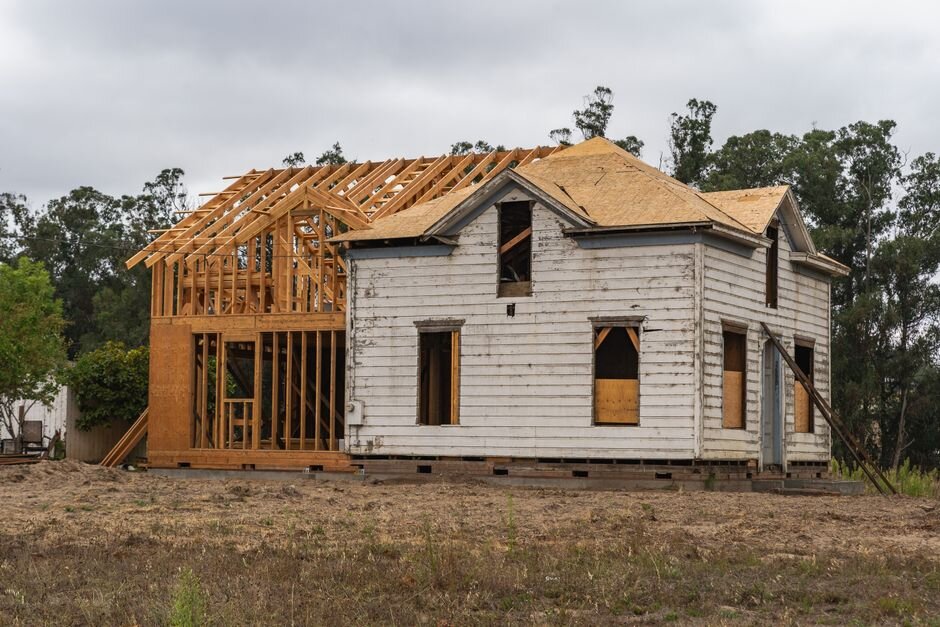
The town’s median build year is 1974, so most of what I look at has a predictable list underneath it. Cast iron drain lines that have been rusting from the inside for decades. Galvanized supply. Panels from brands carriers won’t write on. None of that is a surprise and none of it changes whether we’re interested.
What changes the number is scale. A roof at year 22 is a line item. A roof at year 22 plus an unpermitted addition plus a failing drain field is a different property, and pretending otherwise wouldn’t help either of us.
The four things that actually stop a financed sale
Worth naming, because these are the specific problems as-is exists to route around. Everything else is negotiation.
A roof past its insurable life. Florida rules say a carrier generally can’t refuse to write or renew on roof age alone when the roof is under 15 years, and past 15 you have a right to an inspection certifying remaining life. Without that, your buyer may not get a binder, and no binder means no loan. The Florida Office of Insurance Regulation covers how carriers are handling it right now.
Square footage that doesn’t match the county record. An appraiser compares your listing against what’s filed, and when the record says three bedrooms and you’re marketing four, the appraisal comes back short and somebody covers the gap. Pull your own record at the Clay County Property Appraiser before you price anything.
Active water intrusion or electrical that won’t pass. Both get written up by an appraiser on an FHA or VA file, and a lot of files around here are FHA or VA because of the base.
A lien or open permit. Clear title is a condition of funding, so an unresolved code enforcement lien or a permit from a 2011 re-roof that never got finalized has to be sorted before closing, not after.
What as-is genuinely gets you
Worth being concrete, because the value is in what doesn’t happen.
Nobody comes back at week four asking for money off. There’s no repair addendum, because the condition was already the basis of the number. No appraisal that has to match a county record. No insurance binder your buyer has to obtain on a roof past its insurable life. No financing contingency to collapse at week five.
That’s what you’re buying with the discount. On a house in good shape with time on the clock, that trade isn’t worth it and I’d tell you so. On a house where any one of those would have killed a financed sale, it isn’t close.
How it compares to fixing it up first
Run it honestly rather than on instinct.
Put a new roof on and you have not added the price of a roof to what you sell for. You’ve removed a reason for somebody to say no. Those are different things and only one shows up in your proceeds. Same with HVAC, same with a panel, and emphatically same with a kitchen.
Meanwhile you spent three months chasing contractors on a house you’re leaving, kept paying for it the whole time, and took on the risk that opening one wall turns up two more problems. That’s the opinion I’ll defend hardest, and it comes from six years and well over a hundred purchases of watching people try it.
Where repair spending does pay is small and cheap. Haul the junk, cut the grass, fix the broken window, get the AC to turn on. Under a thousand dollars, roughly.
And how it compares to going the traditional route
A marketed sale usually shows a higher figure on the sign. What comes off it: commission on both sides, whatever the inspection produces on a house of this age, and the payments you keep making every month it sits. In April 2026 the typical Clay County house sold for about 94.8% of asking before any of that came out.
Both are real paths. The comparison worth making is what lands in your account and when, not what goes on a sign. If condition is what’s making you hesitate, this covers which problems actually stop a sale, and the process is written out step by step.
We Buy Houses Orange Park will look at it in whatever condition it’s in and give you a number with the reasoning attached. You don’t have to fix anything, clean anything, or apologize for anything.
Josiah Murdaugh grew up in Orange Park and spent 11 years as a licensed real estate agent before he started buying houses directly. He has bought more than a hundred since. About We Buy Houses Orange Park.