
A lot of the older houses I look at here have square footage that doesn’t show up on the county record. An enclosed carport. A Florida room. A fourth bedroom that used to be the garage.
Most of the time the current owner didn’t do it. They bought the house that way in 2004 and had no idea until somebody told them. If you want to sell a house with code violations or an unpermitted addition in Orange Park, here’s what actually happens next, depending on which situation you’re in.
If you’re not sure whether it was permitted
Find out before you list anything, because a buyer’s appraiser will.
Pull your property record from the Clay County Property Appraiser and look at the recorded square footage and room count. If the county says three bedrooms and 1,400 square feet and you’ve been living in four bedrooms and 1,750, you have your answer.
Then go to the right office for the permit history, and this is where people waste a week. Inside the Town of Orange Park limits, that’s Town Hall. In Bellair, Lakeside, Oakleaf, or most of the surrounding area, it’s Clay County. Sellers call the wrong one, get told there’s nothing on file, and think they’re clear.
If it was permitted but never finalized
This is the open permit situation, and it’s more common than the unpermitted one.
Somebody pulled a permit, did the work, and never called for the final inspection. The permit is still sitting open, attached to the property rather than to whoever pulled it. That means it’s yours now regardless of who did it or when.
Closing one out means getting an inspection on work that was finished years ago. Sometimes it passes and you’re done for the price of a fee. Sometimes an inspector wants to see behind drywall that went up in 2011. There’s no way to know which until you start, which is why starting early matters more than the cost.
If it was never permitted at all
Your options are a retroactive permit, a price adjustment, or a buyer who doesn’t need a lender’s blessing.
A retroactive permit means submitting plans for work already done and having it inspected to current code. Work from 1985 built to 1985 standards frequently doesn’t meet 2026 code, so this can mean opening walls, upgrading electrical, or redoing a roof tie-in. Cost and timeline are genuinely unpredictable, which is the real problem with this path when you’re trying to sell.
You also can’t just leave it off the listing. Florida expects a seller to disclose known material defects that aren’t readily observable, and once you know, you know. That obligation doesn’t end at closing.
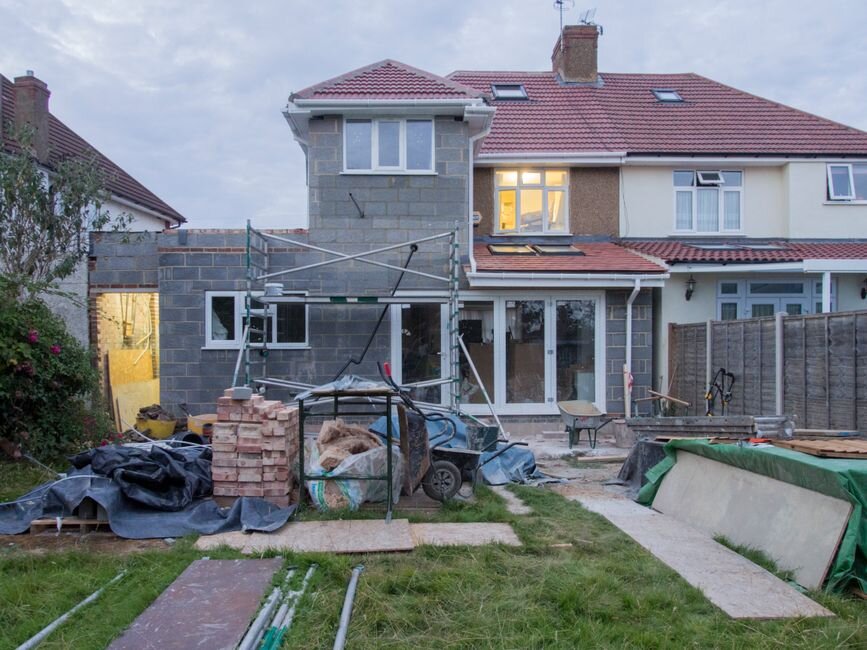
What it does to your square footage, and your price
Here’s the part that costs actual money and almost nobody works through in advance.
If the county has you at 1,400 square feet and you’re marketing 1,750, you’re pricing off a number a buyer’s appraiser will not use. On a Clay County median around $364,990, the difference between those two figures is not small, and it lands as a price reduction three weeks into a contract instead of a pricing decision you made deliberately in week one.
Some sellers handle this by pricing off the recorded square footage from the start and describing the extra space honestly as unpermitted. That’s a legitimate approach. It sets expectations, it keeps you out of a renegotiation, and it attracts buyers who aren’t going to walk when the appraisal confirms what you already told them.
Why it matters more than it seems like it should
The house didn’t change. What changed is whether a lender will finance it.
An appraiser working a buyer’s file compares against county records. When your listing says four bedrooms and the record says three, the appraisal comes back reflecting three, which means it comes back low, which means the buyer’s loan is short and somebody has to cover the gap. Usually that’s you, in the form of a price cut, three weeks into a contract when your negotiating position is at its weakest.
Insurance is the other one. A carrier writing a policy on unpermitted living space can decline coverage on that portion, and no binder means no loan.
If you have time and the money to spend
Then getting it permitted is worth pricing out. Call the right office, ask what a retroactive permit on your specific situation involves, and get a contractor to quote the likely corrections.
Just know what you’re signing up for. This is money out of your pocket now, on a house you’re leaving, on a timeline nobody can promise you. The town’s median house was built in 1974, so we’re often talking about bringing fifty-year-old work up to current code. I’ve watched people start this in March expecting six weeks and still be at it in August.
If you don’t have the time or the cash
Then you’re choosing between selling at a price that reflects the problem, or selling to somebody who doesn’t need an appraisal to match a county record.
The traditional route is still available and worth running the numbers on. Understand what comes off the top, though: commission on both sides, whatever the inspection turns up, the appraisal risk specifically created by the square footage mismatch, and the months of payments while you find out whether a lender will play along. If a deal falls apart over this once, you’re back on the market with a listing buyers now assume has something wrong with it, which is a harder position than where you started.
Selling direct takes the unpermitted addition as a line in the price instead of a reason for a lender to say no. There’s no appraisal to come in short and no underwriter comparing your listing to a county record. That’s not me being clever about it, it’s just that the specific thing blocking you doesn’t exist in a cash purchase.
We Buy Houses Orange Park buys houses with unpermitted additions, open permits, and square footage that’s never matched the record, and I’d rather find out about yours on day one when it’s a pricing input than on day 25 when it turns into leverage. If there’s more going on than just the addition, here’s how the bigger condition problems get handled, and if you’re not sure which government holds your records, the town limits map settles it in a minute.
The one thing I’d stop doing is hoping nobody notices. They notice. It’s on a public record either of you can pull up in thirty seconds.
Josiah Murdaugh grew up in Orange Park and spent 11 years as a licensed real estate agent before he started buying houses directly. He has bought more than a hundred since. About We Buy Houses Orange Park.