
I bought a house once where the previous tenants had started a fire that got into the brush behind the property and spread far enough that the neighborhood had to be evacuated.
The owner was not a bad landlord. He was a guy with a rental and a tenant who did something catastrophic, and by the time it was over he was completely finished with the business.
That’s the far end of it. But if you’re trying to sell a house with bad tenants in Orange Park, or you’ve just walked into a place you own and can’t quite process what you’re looking at, the decisions ahead of you are the same regardless of scale.
First: document everything before you touch anything
Photos and video of every room, every surface, timestamped. Before you haul a single bag out.
You’ll need it for the security deposit accounting, for any insurance claim, and for any claim you might pursue against the tenant. Once you start cleaning, the evidence is gone and you’re arguing from memory against somebody who will remember it differently.
Florida has specific requirements and deadlines around how a landlord handles a security deposit and notifies a tenant of a claim against it. Those deadlines are short and missing them can cost you the deposit entirely. Look up the current rule or ask an attorney before you send anything.
Second: figure out what’s actually damaged
Separate the piles, because they get treated differently and they cost very differently.
Ordinary wear is not damage. Worn carpet in a traffic lane, scuffed paint, a tired kitchen after four years of somebody living there. You don’t get to charge for that and trying to is how landlords lose in court.
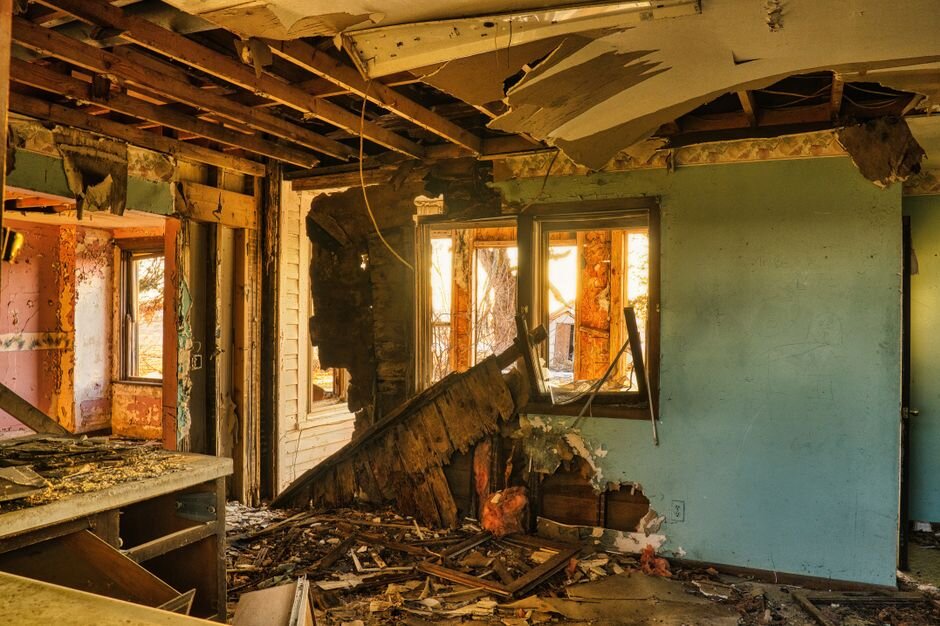
Damage is holes, missing fixtures, destroyed flooring, pet urine into the subfloor, appliances that walked off. Then there’s the third pile, which is the expensive one: things that got worse because nobody reported them. A slow leak under a sink that ran for eight months. A roof leak nobody mentioned. Those don’t look dramatic and they’re frequently the biggest number on the list.
Third: find out whether insurance covers any of it
Depends on your policy and what happened.
Sudden and accidental damage is usually a different question than gradual deterioration or ordinary neglect, and most landlord policies treat them very differently. A fire is a claim. Eight months of a tenant not mentioning a leak often isn’t.
Before you file anything, think about what a claim does to you afterward. Claim history follows the property and affects future insurability, and in Florida that matters more than it used to. The Florida Office of Insurance Regulation covers how carriers are currently handling claims and roof age, which is worth reading before you file anything. A small claim that raises your premium or gets you non-renewed can cost more over time than the repair would have.
The number nobody runs
Here’s where landlords make the expensive decision badly.
Get an actual repair estimate. Not a guess, a real number from somebody who will do the work. Then add the months of vacancy while it happens, the mortgage and taxes at around 15.05 mills countywide, insurance, and utilities. That total is what it costs you to get this property back to rentable.
Then ask the honest question: after all that, are you going to rent it again? Because if the answer is no, you just spent that money to prepare a house for a sale you could have made in its current condition.
A lot of landlords fix it up, rent it once more, and are back in the same spot two years later. The repair wasn’t the mistake. Not deciding whether they still wanted to be a landlord was.
If the tenant is still there
Different problem, and a harder one.
You can sell a tenant-occupied property, and in Florida an existing lease generally survives the sale, which means your buyer inherits the tenant and the terms. That shrinks your buyer pool considerably. Most retail buyers want to move in. Investors will buy it, and they’ll price the situation.
A tenant who won’t cooperate with showings makes a traditional listing close to impossible in practice. You can have the legal right of access and still have a buyer walking through a hostile house with a dog in the yard and dishes everywhere. That kills deals, and it’s not something an agent can fix for you.
Do not try to force the situation yourself. Florida has a specific eviction process and self-help lockouts or utility shutoffs create liability that is far worse than the original problem. If it’s gotten to that point, that’s an attorney conversation.
What being done actually looks like
After six years and well over a hundred houses, the pattern I’d point out is that most landlords who call me aren’t calling about the damage. They’re calling because the damage was the last thing in a longer list.
The third turnover. The special assessment. The roof coming due. The realization that the rent hasn’t kept up with the taxes and insurance. The damage is just what made the decision finally get made.
If that’s where you are, be honest with yourself about it, because it changes what the right move is. Somebody who wants to keep the property should fix it properly. Somebody who’s finished should stop putting money into an asset they’re leaving.
Your options, straight
Damage is cosmetic, the tenant is gone, and you want to keep owning it? Fix it and re-rent. That’s the whole answer.
Want out, house is in decent shape, no tenant in place? A traditional sale is worth pricing out. Count what comes off it: commission on both sides, whatever an inspection turns up, and the payments while it sits. In this county the typical seller took around 94.8% of asking in April 2026, so build that in.
Want out, and there’s real damage, or a tenant who won’t leave, or a house that won’t pass a lender’s condition requirements? That’s the specific situation where selling direct is the stronger option rather than the fallback. There’s no appraiser to satisfy, no insurance binder to obtain, and no showings for a tenant to obstruct.
We Buy Houses Orange Park buys tenant-occupied properties, fire-damaged houses, and rentals that got destroyed by somebody who stopped caring in month three. We’ve seen it, it goes in the price, and you’re done. There’s more on how a rental sale actually runs, and if it’s the condition rather than the tenant that’s the problem, start here instead.
For the legal side, the Florida Bar’s consumer resources are a reasonable starting point before you call an attorney, and it’s worth calling one before you take any action on a tenant who’s still in the property.
Josiah Murdaugh grew up in Orange Park and spent 11 years as a licensed real estate agent before he started buying houses directly. He has bought more than a hundred since. About We Buy Houses Orange Park.