
We had a contractor working at a house and he backed his truck across the yard, which is what anybody would do. The septic tank lid was under there. It gave out and the back end of the truck dropped into the tank.
Nobody got hurt. The truck came out. The day was gone.
That’s a decent picture of what repairs look like on an older Clay County property. It’s rarely the thing you budgeted for. So if you’re trying to sell a house that needs repairs in Orange Park, the real question isn’t what everything costs. It’s which repairs are worth your money and which ones you should stop thinking about.
First, sort the repairs into two piles
The ones that stop a loan
An appraiser working an FHA or VA file, and a lot of files here are FHA or VA because of the base, will write up active roof leaks, missing handrails, exposed wiring, systems that don’t work, standing water under the house, and peeling paint on anything built before 1978. Conventional lenders are looser but not indifferent.
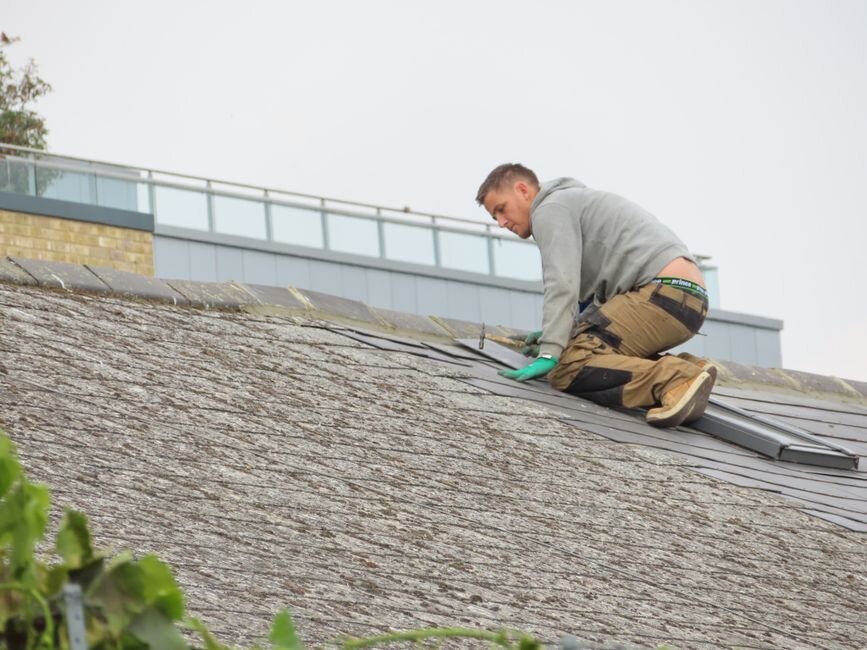
The roof is usually the whole conversation. Florida rules say an insurer generally can’t refuse to write or renew a policy just because of roof age when the roof is under 15 years old. Past 15, you have the right to an inspection by an authorized inspector, and if they certify five or more years of remaining life, the carrier can’t drop you on age alone. Practically, that means if your roof is over 15 and hasn’t been looked at, your buyer may not get an insurance binder. No binder, no loan. That’s a deal-killer dressed up as a repair. Before you spend anything, check your flood zone at the FEMA Map Service Center too, since that feeds the same insurance problem and buyers will look it up whether you do or not.
The ones that only cost you at the table
Ugly kitchens. Old bathrooms. Popcorn ceilings. Carpet from 1994. Buyers knock the price for these but they can still close, which makes them a completely different category.
The town’s median build year is 1974, so most houses around here have some of both piles. Sorting them is the whole exercise.
Path one: fix it first
Where this actually pays
Small, cheap, and cosmetic. Haul the junk. Cut the grass and cut it again. Replace the broken window pane. Get the AC to at least turn on. Under a thousand dollars, roughly, and it genuinely moves your number.
My first job was at Pinch a Penny selling chlorine to people who were, without exception, unhappy about their pool. I’ve been listening to homeowners talk about what a thing “should” cost since I was a teenager, and the gap between should and does has not gotten smaller.
Where it stops paying
Past that, fast. Put a new roof on and you haven’t added the price of a roof to your sale number. You’ve removed a reason for somebody to say no. Those aren’t the same thing and only one shows up in your proceeds. Same with HVAC, same with a panel, and emphatically same with a kitchen.
Meanwhile you’ve spent three months chasing contractors on a house you’re trying to leave, kept paying for it the whole time, and taken on the risk that opening one wall turns up two more problems. If somebody is telling you to put twenty thousand dollars into a house you’re selling, ask them to show you the comparable sales that justify it, in writing.
The hidden ones are what blow up budgets. Cast iron drain lines rusted through under the slab. An electrical panel from a brand carriers decline outright. A garage conversion the county has no permit for, so the square footage in your listing doesn’t match the record and the appraisal comes in short. An open permit from a re-roof in 2011 that never got its final inspection.
That last one deserves a note because people misunderstand it. An open permit isn’t a fine or a lien. It’s an unfinished record attached to the property, not to whoever pulled it. Which office holds it depends on where you are, the Town of Orange Park inside the town limits and Clay County out in Bellair, Lakeside, or Oakleaf. Sellers call the wrong one, get told there’s nothing on file, and believe it until the buyer’s title work says otherwise.
Path two: sell it as it stands
What you give up
Price. A cash number is lower than what a fixed-up house brings on the open market, and I’m not going to dress that up.
What you stop paying for
The repairs themselves, out of your own pocket, on a house you’re leaving. The commission. The repair credits negotiated after the inspection, which on a distressed property are never small. The months of payments while contractors come and go. And the risk of the whole thing collapsing at week five over a roof or a panel and starting again with a listing buyers now assume has something wrong with it.
That’s the honest comparison. It isn’t price versus price. It’s price minus all of that, versus a number you know today.
There’s a timing piece too that people forget. Contractors around here are busy, and a roof or a repipe means waiting for a slot, then waiting for the work, then waiting on the inspection if it needed a permit. Three months is optimistic. During all of it you own a house that’s torn up and unsellable, and if the estimate comes back higher once somebody opens a wall, you’re choosing between paying more or stopping halfway with a house in worse shape than when you started. We Buy Houses Orange Park ends up buying a fair number of houses at exactly that point, which is a more expensive way to arrive at the same place.
How to actually decide
If everything on your list is in the second pile, cosmetic and under a few thousand dollars, do the cheap work and price it out both ways. That’s a genuine choice and worth running the numbers on.
If anything is in the first pile, a roof past its insurable life, an unpermitted addition, active water intrusion, electrical that won’t pass, or a lien or open permit tangled into it, then stop trying to push the house through a process it can’t survive. Your buyer pool has already collapsed to people paying cash whether you put it on the market or not. All that’s left to decide is whether you spend four months finding that out.
We take the condition, the permit, and the lien as pricing inputs instead of reasons to walk, and there’s no inspection renegotiation because there’s nothing to renegotiate. We Buy Houses Orange Park has bought houses with worse septic stories than the one at the top of this page and none of them were a problem, just a number. Here’s how we handle houses that need real work, and if yours is in one of the older pockets of the county, Lakeside gives you a sense of what’s typical for the age.
And if the roof is what you’re stuck on, read how carriers are currently treating older ones at the Florida Office of Insurance Regulation before you sign a contract with anybody. It’s the single fact most likely to decide which of these two paths you actually have available.
Josiah Murdaugh grew up in Orange Park and spent 11 years as a licensed real estate agent before he started buying houses directly. He has bought more than a hundred since. About We Buy Houses Orange Park.